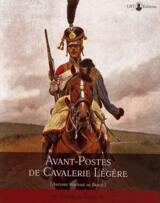
This work was conceived, and written in haste, as though the regiment were already under orders to pass the frontier; for it should be explained that this book was intended only for the squadrons commanded by de Brack. This haste was indeed a fortunate thing. The author, not having had time to ransack treatises and consult books, simply reproduced his recollections of the great cavalry heroes, Seidlitz, Lasalle, Murat, and Bessières, and from memory repeated the practical lessons given by the colonels and captains who had raised the reputation of the cavalry to so high a pitch. Written with an intelligence vast and active, with a glowing heart, in an observing and delicate spirit, with a rare love for the soldier, this book, almost improvised, is a charming little masterpiece. At once witty and profound, the author, laying aside all prejudice, shows himself so original that certain parts, without ceasing to be true, have a perfume of poetry which charms the military reader. De Brack never loses sight of the morale of the soldier; he speaks of honor, of courage, of devotion, and his language makes one thrill. The style moves on at a cavalry pace, which is well adapted to the subject.(Preface to the 3rd Édition) Biographie de l'auteur The author of this book was one of the most brilliant cavalry officers of the Empire. A pupil of Lasalle, of Montbrun, of Colbert, of Pajol, he appeared destined to the highest military honors, when the disaster of Waterloo overtook the Grand Army. In spite of his youth his tastes, his instincts, his experience, and the prospects of a brilliant military career, de Brack sheathed his sword. Although withdrawn from the army, he was, however, no stranger to its progress and labors. After fifteen years absence Lieutenant-Colonel de Brack resumed his place at the head of our squadrons. From 1815 to 1830 our military organization had been as much modified as the regimental manners and customs. The adoption of the new regulations had brought into high favor theoretical instruction, and de Brack, who returned with his ideas of war, was struck with the importance which had been given to theory over practice in the ranks of the cavalry. (Preface to the 3rd Édition)